2025-11-27
5 Ways High-Precision Machining Vises Improve CNC Efficiency and Accuracy
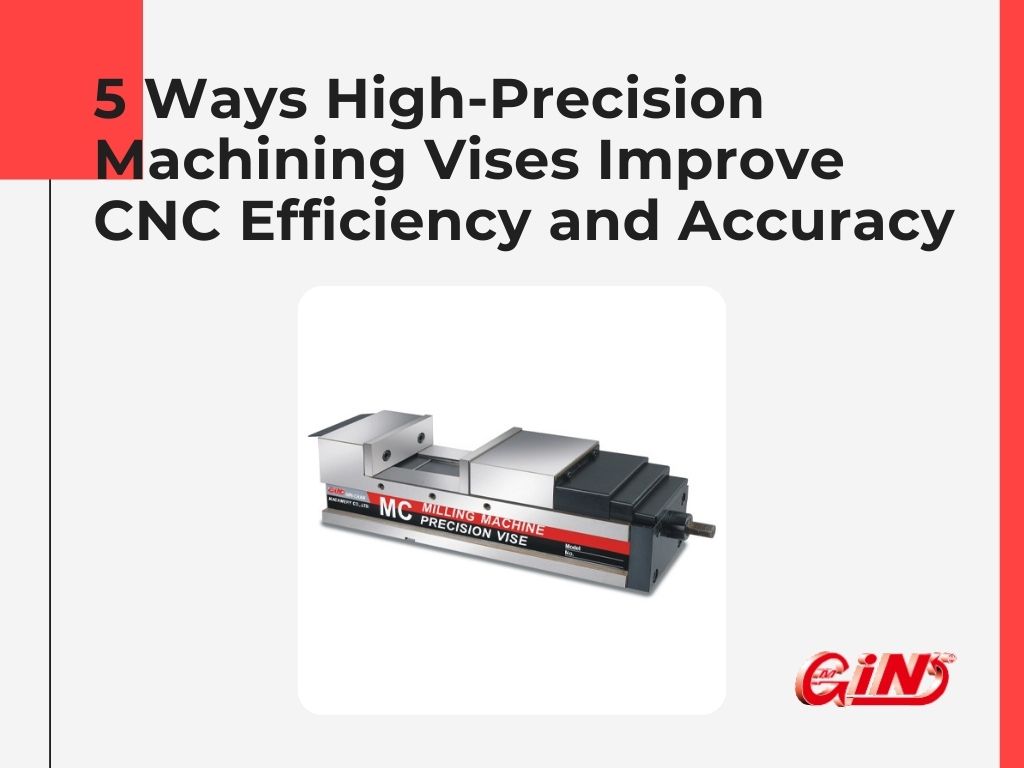
In modern CNC machining, consistency, accuracy, and productivity are key to staying competitive. Machining errors, unstable clamping, and excessive setup time can quickly result in increased costs and reduced throughput. That’s why high-precision machining vises have become essential in both small machine shops and large-scale automated manufacturing lines.
Machining vises are more than just workpiece holders—they are precision workholding systems engineered to maintain stability, repeatability, and parallelism during demanding cutting operations. In this article, we explore five major ways machining vises contribute to improved machining performance.
1. Enhanced Clamping Stability Reduces Part Deflection
One of the biggest challenges in CNC milling is maintaining rigidity during heavy-duty cutting. Vibration or part movement can lead to:
-
Dimensional errors
-
Poor surface finish
-
Shorter tool life
High-precision machining vises eliminate these issues through:
-
Heat-treated and ground steel construction
-
High clamping force with stable jaw contact
-
Minimal bending or lifting of the workpiece
With the right vise, even aggressive rough milling operations remain stable, ensuring better part quality from start to finish.
2. Improved Accuracy and Repeatability for Consistent Results
When machining multiple identical components, repeatability is critical. Precision vises offer:
-
Highly controlled parallelism and squareness
-
Uniform clamping pressure
-
Secure seating for accurate referencing
This allows CNC machines to hold tight tolerances across production batches. Components can be swapped in and out quickly while maintaining exact positioning—greatly reducing measurement and rework time.
3. Faster Setup Speeds Increase Throughput
Every second saved in part setup improves overall productivity. High-quality machining vises support faster setups through:
-
Quick-change jaws
-
Fixed datum positions
-
Standardized workholding surfaces
Operators are able to mount, align, clamp, and switch parts efficiently—all while maintaining machining precision. Shorter cycle time equals higher equipment utilization and increased profit.
4. Perfect for Multi-Axis Machining Applications
As 4-axis and 5-axis CNC machining continues to grow, traditional vises often cannot provide sufficient clearance or positioning flexibility. Modern machining vises are specifically designed for multi-face machining with features such as:
-
Compact bodies for maximum stroke and tool access
-
Self-centering action for optimal symmetry
-
Improved accessibility for angular and contoured parts
These capabilities allow shops to reduce setups and machine more features in one clamping—boosting accuracy and manufacturing efficiency.
5. Better Surface Finishes with Reduced Tool Wear
Stable clamping directly impacts cutting performance. When vibration is minimized:
-
Surface roughness improves
-
Cutting forces remain consistent
-
Tools last longer and break less frequently
A precision machining vise ensures a secure foundation, helping both tools and CNC equipment operate at their peak efficiency during milling, drilling, and high-speed finishing.
Gin Tech High-Precision Machining Vises
At Gin Tech, we engineer machining vises that meet the demands of modern CNC production. Our designs combine high rigidity, accuracy, and operator-friendly setup to support efficient machining workflows.
Key features include:
-
Stable, hardened steel structures for maximum durability
-
High clamping force to prevent workpiece lifting and vibration
-
Excellent parallelism and repeatability across production cycles
-
Models suitable for 3-axis to 5-axis machining
Our vises are widely used in industries including aerospace, automotive, electronics, and mold manufacturing—where precision and reliability are non-negotiable.
FAQ — Machining Vises
Q1. Are machining vises only used for milling?
No. They are also used in drilling, grinding, jig-boring, and inspection applications requiring stable positioning.
Q2. What’s the difference between a machining vise and a bench vise?
Machining vises are engineered for precision operation on machine tools, offering far tighter tolerances and rigidity compared to general-purpose bench vises.
Q3. How do I choose the right vise size?
Consider part dimensions, required clamping force, jaw opening, machine table specifications, and whether multi-axis clearance is needed.
Q4. Do machining vises require maintenance?
Yes. Regular cleaning, lubrication of screw mechanisms, and precision inspection help extend service life and accuracy.
Conclusion
Investing in a high-precision machining vise is one of the most impactful ways to improve CNC machining performance. From stability and accuracy to quicker setups and longer tool life, the productivity benefits are immediate and measurable.
☛ Ready to upgrade your workholding system?
Explore Gin Tech’s precision vises and unlock higher-efficiency machining today.
✉︎ Contact us: https://www.gin-chan.com/en-US/contact