2025-12-18
Choosing the Right Tool Maker Vise for Grinding, EDM, and Measurement Tasks
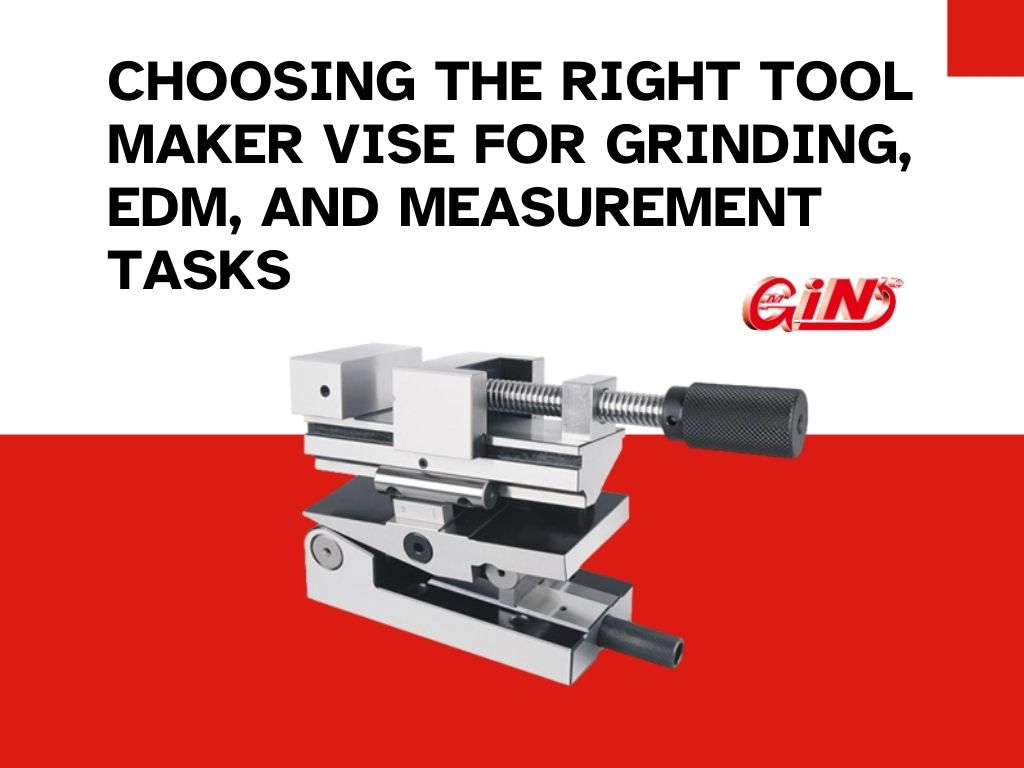
In precision manufacturing environments such as tool rooms, mold shops, and inspection labs, workholding accuracy is just as important as machine accuracy. When tolerances are measured in microns, even minor positioning errors can lead to scrap, rework, or inaccurate inspection results. This is where a tool maker vise plays a critical role.
Although often associated with grinding, a tool maker vise is not limited to a single process. Its versatility allows it to function effectively as a grinding vise, an EDM holding solution, and a precision fixture for measurement and inspection tasks. This article explains how to choose the right tool maker vise based on application requirements and highlights key considerations for achieving consistent precision.
What Is a Tool Maker Vise?
A tool maker vise is a compact, high-precision workholding device designed for applications requiring exceptional parallelism, squareness, and repeatability. Unlike standard milling vises, tool maker vises are optimized for light-to-medium clamping forces with maximum dimensional stability.
They are commonly used in:
- Surface grinding
- Wire EDM and sinker EDM
- Jig grinding
- Precision inspection and measurement
Because of their high accuracy and compact form, tool maker vises are frequently used as grinding vises on surface grinders and magnetic chucks.
Why Tool Maker Vises Are Ideal for Grinding Applications
Grinding operations demand stable, distortion-free clamping. Excessive force or uneven pressure can cause workpiece deformation, resulting in taper, chatter, or inconsistent surface finish.
Tool maker vises offer several advantages when used as grinding vises:
- Extremely high parallelism between jaws and base
- Low-profile design for better magnetic chuck contact
- Uniform clamping pressure to minimize part distortion
- Hardened and precision-ground surfaces for long-term accuracy
These characteristics make tool maker vises particularly suitable for surface grinding, where flatness and parallelism are critical.
Key Factors to Consider When Choosing a Tool Maker Vise
1. Parallelism and Squareness Accuracy
Accuracy specifications are the most important selection criteria. A high-quality tool maker vise typically offers:
- Jaw-to-base parallelism within a few microns
- Squareness maintained across the full clamping range
These tolerances ensure reliable performance not only during grinding, but also during EDM and precision measurement tasks.
2. Material and Heat Treatment
Most precision tool maker vises are made from high-grade alloy tool steel, fully heat-treated and precision-ground. Proper material selection and heat treatment ensure:
- Long-term dimensional stability
- Resistance to wear and deformation
- Consistent accuracy even after extended use
For grinding vise applications, hardened surfaces also help resist abrasive dust and repeated clamping stress.
3. Suitability for Grinding vs. EDM
While tool maker vises are widely used as grinding vises, not all models are equally suitable for EDM environments. When selecting a vise for EDM, consider:
- Corrosion resistance
- Anti-distortion structural design
- Smooth, debris-resistant surfaces
Choosing a vise that performs reliably in both grinding and EDM improves overall shop flexibility.
4. Clamping Method and Force Control
Unlike milling vises, tool maker vises are designed to apply controlled, moderate clamping force. This is essential for:
- Preventing workpiece distortion during grinding
- Maintaining dimensional accuracy during inspection
- Holding thin or delicate components securely
Screw-rod locking mechanisms are commonly used to provide stable, repeatable clamping without over-tightening.
5. Compatibility with Magnetic Chucks and Fixtures
For surface grinding, compatibility with magnetic chucks is critical. A tool maker vise used as a grinding vise should have:
- A flat, precision-ground base
- Minimal clearance when clamped
- Stable contact with the magnetic chuck to prevent lifting
This ensures consistent positioning and repeatable grinding results.
Gin Tech Tool Maker Vises for Precision Applications
At Gin Tech, our tool maker vises are engineered to meet the demanding requirements of precision grinding, EDM, and measurement environments. Designed with both accuracy and durability in mind, Gin Tech tool maker vises deliver reliable performance across a wide range of high-precision applications.
Key features of Gin Tech tool maker vises include:
- Optimized structure for minimal clearance – A new structural design minimizes clearance when the vise is locked tight, enhancing rigidity and holding stability during grinding and inspection.
- High-quality material and hardness – Manufactured from premium alloy tool steels such as SK2 and SKS3, then heat-treated and precision-ground to maintain long-term dimensional stability.
- Superior parallelism and clamping precision – Precision-ground contact surfaces and anti-distortion design help ensure consistent accuracy in grinding, EDM, and measurement tasks.
- Anti-distortion screw rod locking mechanism – The screw rod locking design provides secure clamping while preventing workpiece deformation, ideal for fine finishing and inspection operations.
- Compact design with easy operation – The low-profile, user-friendly design makes these vises well suited for surface grinding, magnetic chuck setups, EDM machines, and precision inspection tables.
These characteristics make Gin Tech tool maker vises a trusted solution in tool rooms and precision shops, especially when used as a grinding vise where stability and accuracy are critical.
Applications Beyond Grinding
Although grinding is one of the most common uses, tool maker vises are also widely applied in:
- Wire EDM – Secure, distortion-free clamping for precision cutting
- Jig Grinding – Accurate positioning for tight-tolerance hole finishing
- Inspection & Measurement – Stable workholding for CMM, optical, and manual inspection
This multi-functional capability makes the tool maker vise a valuable asset in high-precision manufacturing environments.
FAQ: Tool Maker Vise and Grinding Vise
Q1: Can a tool maker vise replace a grinding vise?
Yes. In many applications, a tool maker vise is used as a grinding vise due to its excellent parallelism, flatness, and dimensional stability.
Q2: Is a tool maker vise suitable for heavy milling?
No. Tool maker vises are designed for precision holding, not heavy cutting. Milling vises or hydraulic vises are better suited for rough machining.
Q3: Why are tool maker vises preferred for inspection tasks?
Their high accuracy, minimal deformation, and stable clamping make them ideal for holding parts during precision measurement.
Q4: How can accuracy be maintained over time?
Regular cleaning, proper storage, and avoiding excessive clamping force help preserve long-term precision.
Conclusion
Choosing the right tool maker vise is essential for achieving consistent accuracy in grinding, EDM, and precision measurement tasks. When selected correctly, a tool maker vise can also serve as a highly reliable grinding vise, offering excellent parallelism, stability, and repeatability.
➤ At Gin Tech, we are committed to providing precision workholding solutions for demanding manufacturing environments. If you are looking for a high-quality tool maker vise for grinding or inspection applications, contact our team to find the right solution for your needs.